



What to Know About the Jim Irsay Collection
Posted by Alejandro on Aug 18th 2026
What to Know About the Jim Irsay Collection
When people think of Jim Irsay, they often think of the longtime owner of the Indianapolis Colts. But among guitar collectors, he's known for something else: building one of the largest private collections of 20th-century American popular culture, including some of the world's most famous vintage guitars.
Over the past two decades, Irsay's collecting and the public exhibitions and auctions tied to his collection have helped bring vintage guitars into the spotlight. His willingness to purchase historically significant instruments for record-breaking prices has influenced how collectors, auction houses, and investors view the market.
While no single collector determines the value of vintage guitars, Jim Irsay has undoubtedly played a role in expanding interest in rare instruments and reinforcing their place as highly collectible pieces of music history.
Key Takeaways
- Jim Irsay's collection helped bring greater attention to the vintage guitar market.
- Celebrity-owned guitars with strong provenance have continued to command premium prices.
- High-profile auctions have attracted new collectors and investors.
- Authenticity, condition, rarity, and historical significance remain the biggest drivers of value.
The Jim Irsay Collection
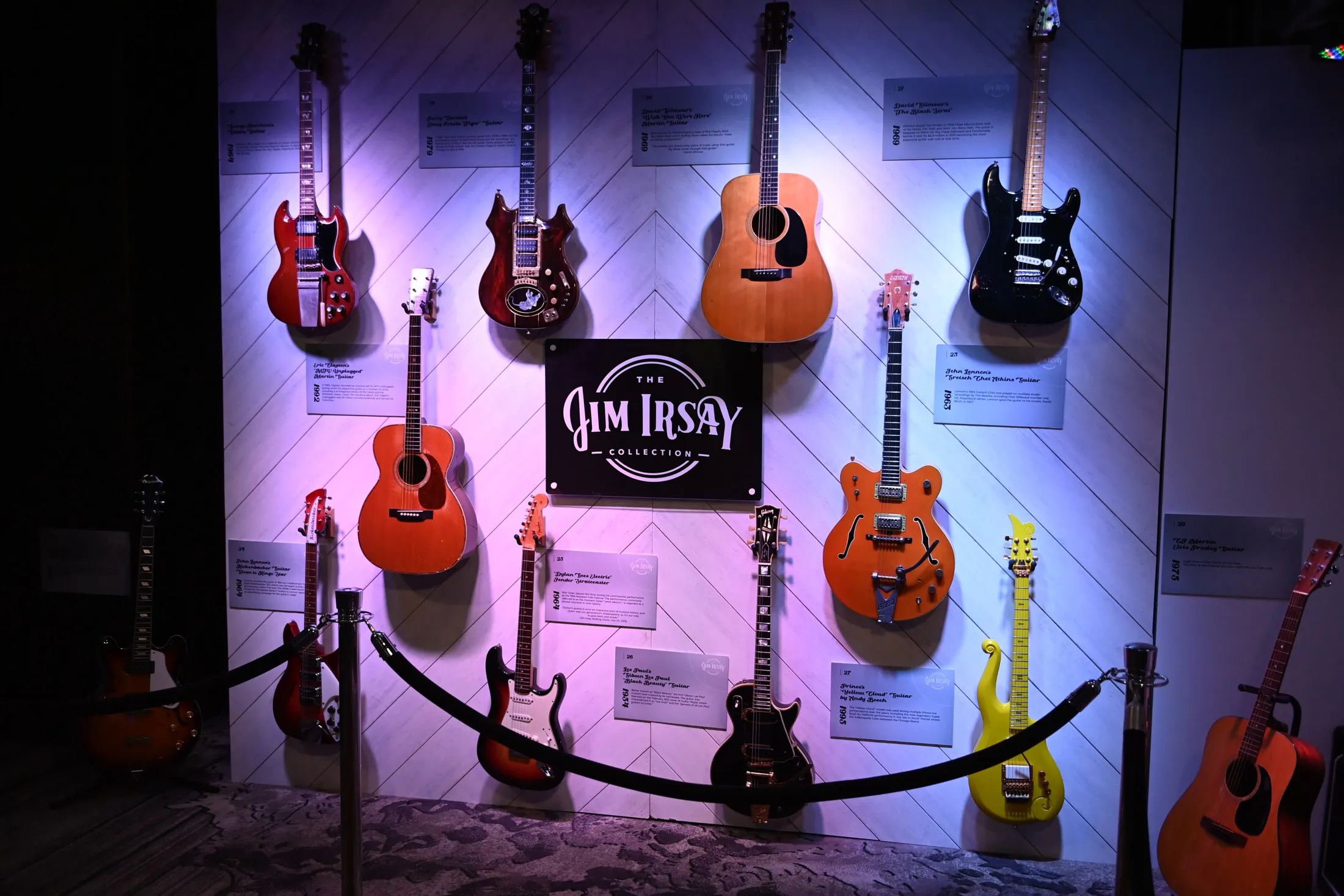
The Jim Irsay Collection includes some of the most recognizable guitars and instruments:
- Eric Clapton's painted "The Fool" Gibson SG
- Jerry Garcia's custom Tiger guitar, built by Doug Irwin
- Janis Joplin's Gibson J-45
- Les Paul's custom Gibson Les Paul Pro guitar
- A pre-war Martin D-45
- The 1966 Fender Mustang guitar played by Kurt Cobain
- A Rose-Morris Rickenbacker given by John Lennon to Ringo Starr
- Elton John's Steinway Model D grand piano
- Miles Davis's black and gold Martin trumpet
Rather than keeping these pieces private, Irsay has shared many of them through a traveling exhibition and concert series, allowing fans to experience important pieces of music history up close.
Why Provenance Matters
One reason many instruments in the Irsay Collection command extraordinary prices is provenance. Simply put, provenance is the documented history of an instrument. A guitar with verified celebrity ownership often carries far more value than an identical model without that history.
For example, documented celebrity ownership connected to artists like Eric Clapton, Jerry Garcia, Kurt Cobain, or members of The Beatles creates a celebrity provenance premium because the guitar represents more than craftsmanship; it represents a moment in music history.
Collectors often evaluate:
- Historical significance
- Cultural significance
- Documented celebrity ownership
- Original documentation
- Overall condition
- Authenticity
Together, these factors can dramatically influence market value.
Record-Breaking Auctions Changed the Conversation
High-profile professional guitar auctions have also helped reshape how people view vintage guitars. Events hosted by Christie's and other major auction houses have featured instruments connected to legendary musicians, drawing attention from both longtime collectors and newcomers.
Sales involving guitars such as David Gilmour's Black Strat and Garcia's Tiger guitar demonstrated that historically important instruments could achieve record-breaking prices alongside fine art and other collectibles.
These events helped reinforce the idea that exceptional vintage guitars are more than musical instruments; they're cultural artifacts.
As Christie's auctions and other marquee sales attracted worldwide attention, vintage guitars became part of a broader conversation about collecting and long-term appreciation.
A Growing Investment Market
Although most collectors buy guitars because they love music, the market has also attracted interest from investors.
In recent years, collecting vintage guitars has increasingly been discussed alongside other alternative investments.
Several factors have contributed to this trend:
- Long-term appreciation of rare instruments
- Limited supply
- Growing collector base expansion
- Increased mainstream investment recognition
- Strong market growth trends
Some analysts have even pointed to the "great wealth transfer" and growing institutional investor participation as reasons more people are paying attention to collectible assets.
That doesn't mean every vintage guitar will increase in value, but historically significant examples have shown remarkable investment appreciation over time.
Supply, Demand, and Scarcity
One reason vintage guitars remain desirable is the simple economics of vintage guitar eras. There will never be more original pre-war Martins, early Fender Stratocasters, or Golden Era Gibsons produced. As collector interest grows, market supply and demand naturally affects prices, especially when a guitar has:
- Original finish
- Matching components
- Minimal replacement parts
- Documented preservation history
- Exceptional provenance
These qualities continue to make the finest examples highly sought after.
Preservation Is More Important Than Ever
As values rise, collectors have become increasingly focused on preserving their instruments, particularly with guitar humidifiers. Proper care helps maintain both playability and long-term value. Many serious collectors use:
- Climate control systems
- Humidity control
- Handcrafted climate-controlled cases
- Humidified guitar display cases
They also carefully document repairs and avoid unnecessary refinishing whenever possible. Issues such as crack repairs, replacement parts, counterfeit labels, and excessive restoration can all affect an instrument's originality and value.
Collectors also pay close attention to vintage tonewoods, including old-growth Brazilian rosewood, because these materials contribute to both historical authenticity and tonal character.
Beyond Guitars: A Changing Collectibles Market
Jim Irsay's influence reaches beyond vintage guitars. His collecting has highlighted a broader shift toward music memorabilia and other alternative assets.
Today, auction houses regularly attract crossover collectors, institutional investors, fans of popular culture, and new generations of buyers. This growing global memorabilia market reflects changing collecting habits, increased liquidity, and a greater appreciation for cultural memory.
As generational collecting trends continue to evolve, many experts believe historically significant instruments will remain an important part of this new memorabilia economy.
What This Means for Collectors
Jim Irsay didn't create the vintage guitar market, but he helped shine a brighter spotlight on it. By preserving historically important instruments, supporting public exhibitions, and participating in high-profile auctions, he introduced more people to the artistry, craftsmanship, and stories behind these guitars.
For today's collectors, these lessons remain the same:
- Buy quality over quantity
- Research authenticity
- Value provenance
- Preserve originality
- Collect instruments you genuinely appreciate
Those principles have guided successful collectors long before record-breaking auctions, and they'll continue to matter regardless of where the market goes next.
FAQs
Why is Jim Irsay important to vintage guitar collecting?
Jim Irsay built one of the largest private collections of historically significant musical instruments and has helped raise awareness of vintage guitars through public exhibitions, high-profile acquisitions, and record-setting auctions. His collection has introduced many new collectors to the historical and cultural value of these instruments.
Did Jim Irsay change the value of vintage guitars?
Irsay's purchases and the publicity surrounding them have helped reinforce demand for rare guitars with exceptional provenance. His collecting activity has contributed to broader interest in vintage guitars as highly collectible assets.
Why does celebrity ownership increase a guitar's value?
A guitar played or owned by a famous musician often carries documented provenance and historical significance that collectors value highly. Instruments associated with iconic artists can command substantial premiums because of their unique connection to music history.
Building a Collection That Lasts
Every vintage guitar has a story. Whether you're searching for a pre-war acoustic, a collectible Gibson, or a historically significant Fender, understanding the factors that influence value can help you make more informed decisions.
At Eddie's Guitars, we're passionate about connecting players and collectors with exceptional instruments. Our team can help you navigate authenticity, provenance, condition, and market trends so you can build a collection with confidence.
If you're ready to buy or sell a guitar or add a special piece to your collection, contact us online or reach out via phone at (314) 274-9571 or email at info@eddiesguitars.com.
Disclaimer: This article is for informational purposes only. It does not constitute legal or financial advice, expressed or implied.
Expert Insight From: Griffin Piazza – Electric & Acoustic Guitar Expert
Griffin has over a decade of experience in the music retail industry and a deep knowledge of both electric and acoustic guitars. His hands-on experience helps ensure our recommendations and insights are grounded in real-world expertise.