



Guitar Humidity and How to Prevent It: Essential Tips
Sep 29th 2026
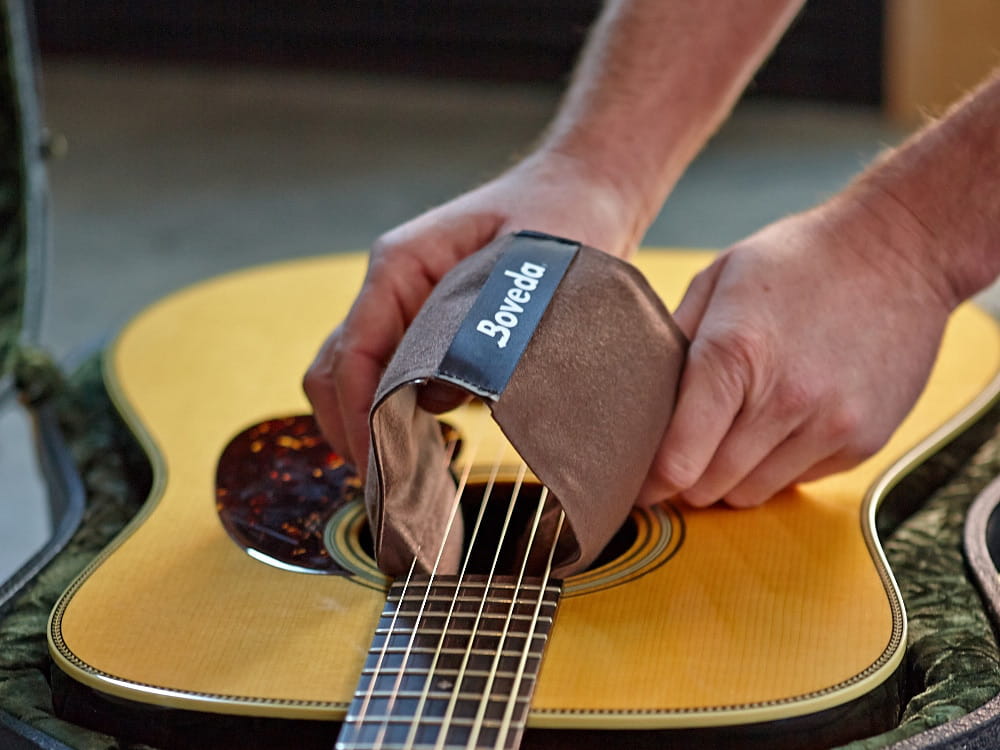
Signs Your Guitar Is Too Humid & How to Prevent It
Guitars and humidity don't always mix well. Because guitars are largely made from wood, they naturally react to moisture in the surrounding air. Too much humidity can cause wood to swell, while too little can cause it to shrink or crack. Rapid changes in temperature and humidity can create problems, too.
This is especially important when caring for vintage, acoustic, and other valuable guitars. Fortunately, proper storage, humidity control, and regular maintenance can help protect your instrument. Understanding guitar humidity and how to prevent it is a simple but important part of keeping a guitar in good condition.
Key Takeaways
- High humidity can affect a guitar's structure, usability, and overall appearance over time.
- Proper guitar storage at stable temperature and humidity levels can help prevent damage and protect your guitar.
- Routine guitar maintenance can reduce the potential impact humidity and temperature have on your guitars.
How Can Humidity Affect My Guitar?
Wood expands and contracts as it absorbs and releases moisture. A guitar is designed to handle normal environmental changes, but prolonged exposure to very humid or very dry conditions can eventually affect its structure.
Too much moisture may cause parts of the guitar to swell. On an acoustic guitar, the top or soundboard can begin to change shape. High humidity can also affect the neck, action, finish, and overall playability.
Possible signs of excess humidity include:
- A swollen or raised guitar top
- Higher-than-normal action
- Changes in neck relief
- Dull or unusual tone
- Finish changes
- Corrosion on strings or hardware
- Changes in tuning or playability
Low humidity creates a different set of problems. As wood loses moisture, it can shrink, potentially resulting in cracks, fret ends that feel sharp, changes in action, or separating joints.
Vintage guitars deserve particular attention because aging wood, finishes, adhesives, and previous repairs can make an instrument more sensitive to environmental changes.
What Humidity and Temperature Levels Should I Store My Guitar In?
For many guitars, maintaining a relative humidity level of approximately 40% to 60% provides a reasonable general range. Some manufacturers recommend a narrower range, so always follow the care instructions for your particular instrument when they're available.
At Eddie’s Guitars, we like to narrow this range down to avoid accidentally under- or over-humidifying. We recommend a humidity level of about 45% to 50% for the ideal for guitars.
Temperature should also remain comfortable and consistent. A climate-controlled room where you would be comfortable spending time is generally much better than a hot attic, damp basement, garage, or other area subject to extremes.
Tips to Prevent Guitar Humidity Damage
You don't need a complicated climate-control system to take better care of most guitars. A few good habits can go a long way toward preventing humidity-related damage.
Store Your Guitar Properly
A quality guitar case provides protection from bumps, dust, and sudden environmental changes. For valuable or vintage guitars, keeping the instrument in its case when it's not being played can also make its immediate environment easier to control.
Choose your storage location carefully. Ideally, keep guitars in an interior, climate-controlled part of your home.
Avoid storing them:
- In attics or garages
- In damp basements
- Next to heating or cooling vents
- Near fireplaces or radiators
- In direct sunlight
- Against areas that experience major temperature swings
If you display guitars on stands or wall hangers, pay even closer attention to the conditions in the entire room.
Check Your Storage Space's Humidity Levels
You can't reliably judge humidity by how the air feels.
A hygrometer measures relative humidity and gives you a much clearer picture of your guitar's environment. Small digital hygrometers are easy to place in a guitar room or, depending on the model, inside a case.
Check readings regularly rather than relying on a single measurement. Humidity can change with the seasons, weather, and use of your home's heating and cooling systems.
Monitoring these patterns helps you respond before conditions become extreme.
Use a Dehumidifier to Control High Humidity
If your guitar room regularly becomes too humid, a dehumidifier can help remove excess moisture from the air. Use a hygrometer to determine when a dehumidifier is necessary and monitor the room as conditions change.
Add Humidity When Conditions Are Too Dry
Humidity control works both ways.
Winter heating and naturally dry climates can cause indoor relative humidity to fall too low. In those situations, a room humidifier or guitar humidifier may help.
When using an in-case system, follow its instructions carefully. You don't want liquid water coming into direct contact with the instrument.
Again, monitoring is key. Don't add moisture simply because it's winter—check the actual humidity first.
Monitor Your Guitar, Not Just the Room
A hygrometer tells you what's happening in the environment. Your guitar can also tell you when something has changed.
Pay attention to:
- Action
- Neck relief
- Tuning stability
- Fret ends
- Top and back shape
- Cracks or seam separation
- Finish condition
- Tone and resonance
If your guitar suddenly becomes harder to play or looks different, don't immediately start making major adjustments. Humidity may be contributing to the problem.
Keep Up With Preventive Maintenance
Regular care gives you a chance to catch small issues before they become expensive ones.
Wipe your guitar down after playing, inspect the wood and finish periodically, and look for changes whenever you replace the strings. Vintage guitar owners should also pay attention to previous repairs and areas that may already be structurally vulnerable.
Avoid trying to rapidly "fix" a humidity problem yourself. Guitar wood needs time to adjust, and forcing a dramatic environmental change can create additional stress.
FAQs
How can I tell if a guitar is too humid?
In general, guitars stored in spaces with humidity above 60% for a long period of time are at risk for being too humid. If your guitar's strings or soundboard look altered, or if your guitar sounds duller than usual, there is a chance it may be affected by humidity.
How can I fix an over-humidified guitar?
Move the guitar to a stable, climate-controlled environment and gradually return it to an appropriate humidity range. A room dehumidifier can help if the surrounding space is consistently too humid. Avoid trying to dry the instrument rapidly, as sudden environmental changes may cause additional damage. If the guitar has warped, cracked, or developed other structural problems, consult a professional luthier.
How long can guitars be in high humidity?
Guitars can usually withstand high humidity for a few days, but it's best to keep them in dry environments to avoid humidity affecting them in the first place. After a couple of weeks to a month, humidity generally starts to impact the guitar's structure and usability.
Should I keep a humidifier in my guitar case?
A guitar or case humidifier can be useful when the surrounding air is too dry, particularly for acoustic guitars. However, you should monitor humidity with a hygrometer rather than automatically using a humidifier year-round. Adding unnecessary moisture can contribute to over-humidification.
Protect Your Guitar for the Long Run
Humidity control in a stable environment helps preserve a guitar's finish, structural integrity, playability, and value. This is particularly important for vintage and collectible guitars that have already survived decades of environmental changes.
At Eddie's Guitars, we understand the care exceptional instruments require. Whether you're protecting a longtime favorite or adding another vintage guitar to your collection, we can assist with proper storage and preventive maintenance. Contact us online or reach out via phone at (314) 274-9571 or email at info@eddiesguitars.com to learn more.
Disclaimer: This article is for informational purposes only. It does not constitute legal or financial advice, expressed or implied
Expert Insight From: Alejandro Montero – Bass Guitar Expert
Alejandro has over a decade of experience in the music retail industry and over a hundred live shows under his belt. His hands-on experience helps ensure our guides and insights are grounded in real-world expertise.
