



How to Properly Store Your Vintage Guitars
Sep 29th 2026
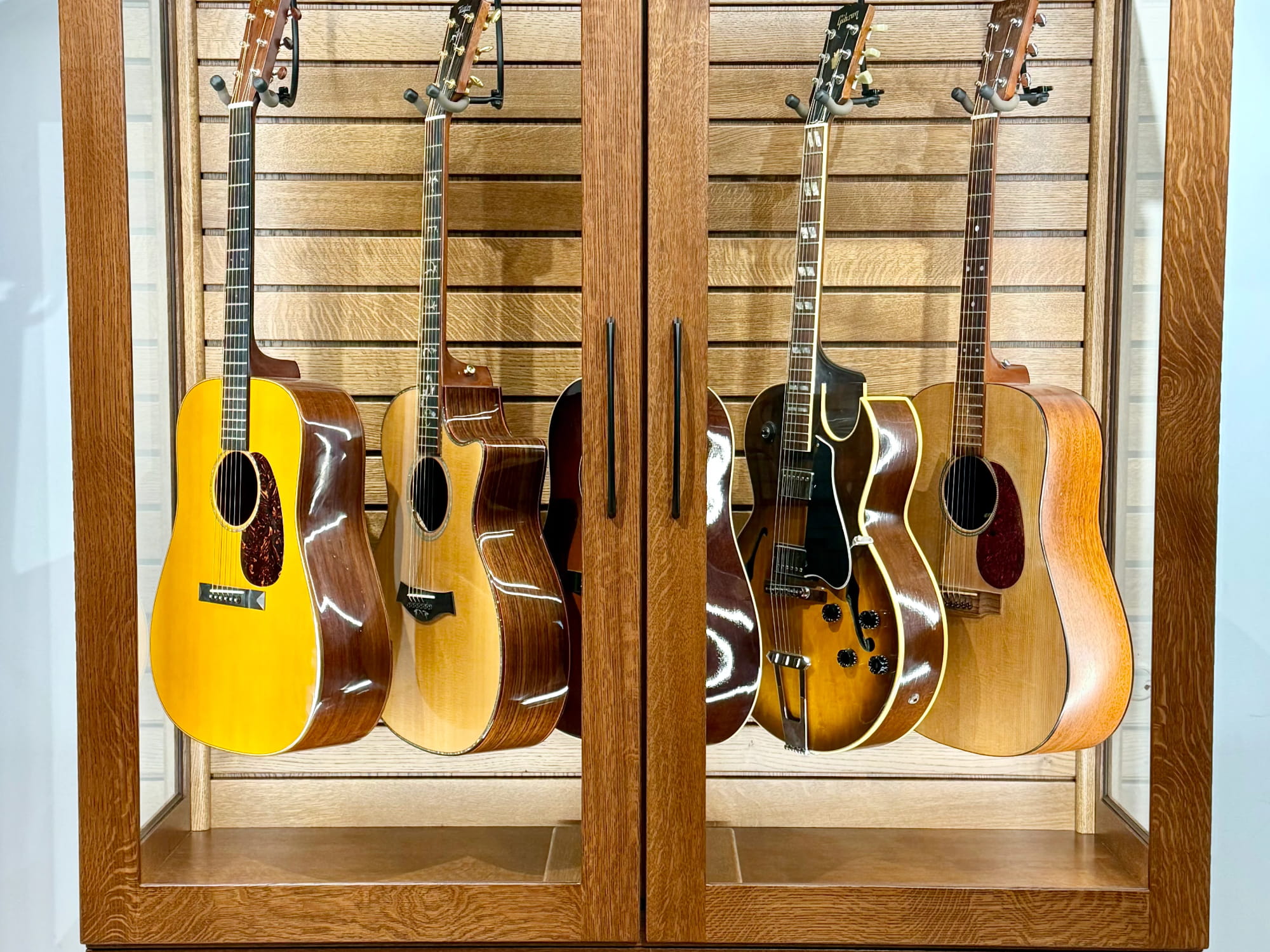
How to Create the Perfect Storing Conditions for Your High-End Guitar
A great vintage guitar was built to be played, but how you care for it between sessions matters. Changes in humidity, direct sunlight exposure, improper stands, and even certain synthetic materials can affect an older instrument over time.
Whether you own one special guitar or a growing guitar collection, proper storage can help protect its condition, playability, and vintage appeal. Here’s how to properly store your vintage guitars while still keeping them accessible when you want to play.
Key Takeaways
- Keep vintage guitars in a cool, dry environment.
- Monitor temperature and humidity to reduce the risk of cracking and warping.
- Choose cases, stands, and hangers made from materials that are safe for your guitar’s finish.
- Regular playing, cleaning, and inspection can help you catch problems early.
Choose the Right Storage Location
Where you keep a vintage guitar is just as important as how you store it. Ideally, choose a central room where temperature and humidity remain relatively stable. Avoid an outside wall, attic, basement, or other location that experiences major temperature fluctuations.
You should also limit direct sunlight exposure. Over time, sunlight and heat can contribute to finish damage, fading, or yellowing.
Depending on the value and size of your collection, good options may include:
- A hard case in a secure spot
- A climate-controlled cabinet
- A dedicated guitar room
- A properly maintained closet
For serious collections, specialized guitar cabinets or humidor-style storage can provide another level of environmental control.
Monitor Humidity
Wood responds naturally to its environment, making humidity one of the most important parts of vintage guitar storage. Low humidity can contribute to shrinking and cracking, while high humidity levels can cause swelling, warping, and other changes.
If your room is difficult to regulate, a guitar humidifier or other humidity-control system may help maintain a more controlled environment. A hygrometer makes it easy to monitor the relative humidity level in your storage space. A general target of about 40%-60% relative humidity is appropriate for many guitars, although the ideal range can depend on the instrument and manufacturer recommendations.
Protect Vintage Guitar Finishes
Vintage finishes can require more care than many modern finishes.
Nitrocellulose lacquer, for example, is known for developing checking, wear, and yellowing with age. That natural patina can be part of a guitar’s character, but improper storage can cause unwanted damage.
Polyurethane finishes and polyester finishes generally behave differently, but you should still choose guitar storage/display equipment made from safe materials.
Be especially cautious about prolonged contact with plastics, rubber, foam, and other synthetic materials. Some materials used on a guitar stand or wall mount can react with nitrocellulose. Also avoid harsh chemicals and household cleaners. Products that work well elsewhere in the home can damage intricate finishes.
Decide on a Case, Stand, or Wall Mount
A quality hard case is often the safest option for long-term storage because it protects the guitar from bumps, dust, and accidental falls while creating a more stable microenvironment.
If displaying your collection is important to you, a floor stand, guitar rack, or wall mount may work, as long as it's appropriate for the instrument.
For wall storage, use a purpose-built hanger securely attached to a wall stud or installed with appropriate heavy-duty hardware. Check that every surface touching the guitar is safe for its finish. The same caution applies to any guitar stand or guitar rack. A beautiful display isn't worth risking finish imprints or a fall.
Don't Ignore String Tension
You generally don't need to loosen the strings completely every time you store a playable guitar. Guitars are designed to handle normal string tension, and removing that tension unnecessarily can affect the balance between the strings and neck.
However, long-term storage or an existing structural concern may require different care. Excessive strain or improper tension can contribute to problems such as neck bowing.
Keep an eye on string condition, neck relief, and tuning stability. If you're unsure about the best approach for a valuable vintage instrument, ask a professional luthier or instrument technician rather than making major adjustments yourself.
Clean Your Guitar Before Storage
Regular maintenance goes a long way toward preserving an older guitar. After playing, gently wipe down the instrument with a clean, soft cloth or polishing cloth to remove oils, fingerprints, and moisture. This helps prevent dust and grime buildup.
Use guitar-specific cleaning products appropriate for the instrument's materials and finish. A wood conditioner or high-quality wood conditioner may be appropriate for certain unfinished fretboards, but it shouldn't automatically be applied to all guitar wood types.
Inspect Your Collection Regularly
Putting a guitar into a hard case doesn't mean you should forget about it. Routine inspections can help you spot:
- Cracks
- Checking or unexpected finish changes
- Moisture
- Loose components
- Corrosion
- Fretboard changes
- Changes in the instrument's tone or playability
Vintage instruments may contain older cuts of wood and components that require specialized care. Catching a small problem early can prevent it from becoming a much larger repair.
Play and Rotate Your Guitars
Collectible guitar models don't have to spend their lives untouched. Regular playing gives you an opportunity to monitor string condition, tuning, sound quality, and overall wood condition. If you own several collection pieces, an instrument rotation can help ensure each guitar gets periodic attention.
Rotation can also reduce uneven wear if some guitars are displayed while others remain stored.
Keep Your Accessories Organized
A well-maintained collection includes more than guitars. Consider creating a storage area for:
- Picks
- Strings
- Tuners
- Capos
- Maintenance supplies
- Documentation
Storage bins, drawers, hooks, or a dedicated gear rack can keep everything accessible without allowing loose objects to come into contact with valuable instruments.
Know When to Call a Professional
Vintage guitars sometimes require care beyond routine maintenance. A professional luthier or instrument technician can assess structural concerns, aging components, neck issues, and other problems without changing the instrument.
This is particularly important with rare guitar models, limited edition models, and historically important collection pieces. Aggressive restoration or a poorly executed professional touch-up can reduce originality and affect value. The goal isn't always to restore a guitar to a high-gloss vintage appearance. In many cases, preserving its natural patina and history is more important.
FAQs
Should vintage guitars be stored in their cases?
A quality hard case is often one of the safest choices for long-term vintage guitar storage. It protects the instrument from impacts, dust, and accidental contact while making humidity easier to manage. If you prefer displaying your guitar, use a secure stand or wall mount with materials that are safe for its finish.
What humidity should vintage guitars be stored at?
A relative humidity level around 40%-60% is generally suitable for many guitars. More important than hitting one exact number is avoiding extreme humidity and sudden changes. Use a hygrometer to monitor conditions and follow any care recommendations specific to your instrument.
Is it better to store guitars with the strings loose?
For routine storage, a healthy, playable guitar generally doesn't require you to loosen the strings. Normal string tension is part of the instrument's setup. If the guitar will be stored for an extended period or has structural concerns, consult a professional luthier about the appropriate string tension.
Can hanging a vintage guitar damage it?
A properly installed, purpose-built guitar hanger can be suitable for some instruments, but both security and material compatibility matter. Make sure the wall hook is firmly anchored and that its padding won't react with the guitar's finish. Extra caution is important with nitrocellulose lacquer and other sensitive vintage finishes.
Protect Your Guitar Collection
Maintaining your vintage guitars begins with storing them properly. It also requires consistent care and maintenance to ensure it remains in good condition over time.
At Eddie's Guitars, we understand the care that exceptional instruments deserve. Whether you're adding another vintage guitar to your collection or need guidance on preserving a special piece, our team can help you protect what makes each instrument unique.
If you're curious about how to best care for your vintage guitars, contact us online or reach out via phone at (314) 274-9571 or email at info@eddiesguitars.com.
Disclaimer: This article is for informational purposes only. It does not constitute legal or financial advice, expressed or implied.
Expert Insight From: Alejandro Montero – Bass Guitar Expert
Alejandro has over a decade of experience in the music retail industry and over a hundred live shows under his belt. His hands-on experience helps ensure our guides and insights are grounded in real-world expertise.