



How to Tune a Guitar (for Beginners) | Eddie's Guitars
Posted by Alejandro on Apr 13th 2026

How to Tune a Guitar for Beginners: Step-by-Step Guide
If your guitar is out of tune, even simple chords can sound wrong, making it harder to stay motivated as you learn. That is why learning how to tune a guitar is one of the most important skills you will learn as a beginner player. A properly tuned instrument not only sounds better, but it also helps you develop your ear and play with confidence.
Why Do Guitars Need Tuning?
Guitars naturally fall out of tune over time due to string tension, dulling strings, and changes in relative humidity levels. Playing an out-of-tune guitar means your music doesn't sound the way you want it to, and it can inhibit you from jamming with other musicians.
Key Takeaways
A guitar in tune:
- Ensures notes sound accurate
- Helps train ears to recognize pitch
- Prevents frustration
- Allows you to play guitar with other musicians
- Improves musical expression
Standard Tuning By Ear
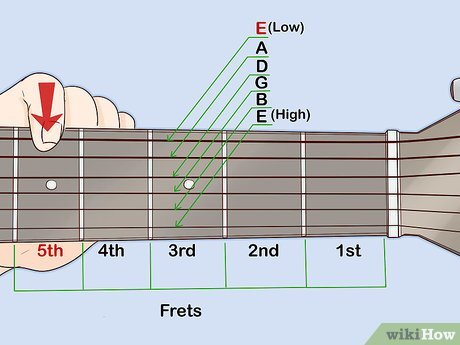
Standard tuning for a six-string guitar is: E-A-D-G-B-E (from lowest string to highest).
To tune your guitar by ear:
- Start with the low E string. Use a reference pitch if possible, such as a piano, tuning fork, or a tuned guitar.
- At the 5th fret, fret the low E string. This note should match the open A string.
- Adjust the A string until it matches the pitch of the fretted E string.
- At the 5th fret, fret the A string. Match it to the open D string.
- At the 5th fret, fret the D string. Match it to the open G string.
- At the 4th fret, fret the G string. Match it to the open B string.
- At the 5th fret, fret the B string. Match it to the open high E string.
- Double-check each string by playing simple chords to confirm everything sounds balanced.
This method takes practice, but is a great way to develop your listening skills.
Tuning with a Tuner Device
Using a tuner is the easiest way to tune a guitar, especially for beginners. There are several types of electronic tuner options available.
Clip-on Tuner
To tune using a clip-on guitar tuner:
- At the headstock, attach the tuner.
- Turn the tuner on and set it to standard tuning mode.
- Pluck the low E string.
- Watch the display and adjust the tuning peg until the note reads "E."
- Continue adjusting until the indicator shows the string is in tune (usually centered or green).
- Repeat for the remaining strings.
- Check each string again after tuning.
Pedal Tuners
To tune a guitar with a pedal tuner:
- Connect your guitar to the pedal using an instrument cable.
- Power on the pedal tuner.
- Activate the tuner by pressing the footswitch.
- Pluck one string at a time.
- Twist the tuning peg until you reach the correct note or pitch.
- Repeat for all six strings.
- Confirm tuning once complete.
Handheld Tuners
To tune a guitar with a handheld tuner:
- Turn on the handheld tuner.
- Place the tuner close to the guitar.
- Pluck a string.
- Twisting the tuner peg the handheld tuner shows the correct note.
- Repeat for each string.
- Recheck tuning once finished.
Online Tuners/Tuner Apps
To tune a guitar with an online tuner or app:
- Open a tuner app or website on your phone or computer.
- Allow access to your device's microphone.
- Pluck one string at a time.
- Watch the screen for pitch detection.
- Twist the tuning rod until the display screen shows the correct note.
- Repeat for all strings.
- Play a chord to confirm overall tuning.
Soundhole Tuner
To tune an acoustic guitar with a soundhole tuner:
- Insert the tuner into the soundhole so it sits securely.
- Turn on the tuner.
- Pluck a string.
- Adjust the tuning peg based on the display.
- Repeat for each string.
- Remove the tuner.
Our Top 7 Guitar Tuning Tips
Developing a consistent tuning routine will make a noticeable difference in your playing experience. Here are some ways to do just that:
- Always tune up to pitch, rather than down, to avoid slack in the string.
- Tune in a quiet environment when using microphone-based tuners.
- Stretch new strings gently to help them settle faster.
- Tune your guitar before you play.
- Check tuning between songs or practice sections.
- Replace old strings regularly, as worn strings can be harder to tune accurately.
- Use light, consistent picking when checking pitch.
FAQs
How do you properly tune a guitar as a beginner?
The easiest way for beginner players to tune is with an electronic tuner.
To do so:
- Start with the low E string.
- Work your way to the high E, adjusting each string until the tuner indicates the correct pitch.
- Take your time.
- Recheck all strings once finished.
Can I tune a guitar myself?
Yes! Even beginners can tune a guitar.
How would you tune an acoustic guitar two steps down from standard tuning?
Two-step down tuning is C-G-C-F-A-D.
To do so:
- Start from standard tuning.
- Then, lower each string by two whole steps.
How do I tune a guitar without a tuner?
You can tune by ear using the 5th fret method. To do so, match each guitar string to the previous one, using the frets as reference points. While less precise than some other methods, it still helps build strong listening skills.
What is open A tuning on a guitar?
Open A tuning means tuning to E-A-E-A-C#-E, a popular tuning for slide guitar and blues. When strummed open, it produces an A major chord.
What are alternate tunings?
Alternate tunings are any tunings that differ from standard E-A-D-G-B-E, such as:
- Drop D
- Open G
- D-A-D-G-A-D
Building Confidence Through Proper Tuning
Whether you rely on an electronic guitar tuner or your ear, learning how to tune a guitar keeps your guitar sounding its best.
Expert Insight From: Alejandro Montero – Bass Guitar Expert
Alejandro has over a decade of experience in the music retail industry and over a hundred live shows under his belt. His hands-on experience helps ensure our guides and insights are grounded in real-world expertise.
