



What is a Truss Rod on a Guitar?
Posted by Alejandro on Feb 19th 2026
All About the Guitar Truss Rod
The truss rod is one of the most important parts of a guitar. Hidden inside the neck of the guitar, it plays a major role in how a guitar feels, plays, and stays in tune over time. Whether you are setting up your own musical instrument or simply want to better understand how your guitar works, learning the basics of the truss rod can help you make informed decisions regarding proper care.
What is a Truss Rod?
A truss rod is a metal rod installed inside a guitar neck, running lengthwise beneath the fretboard. It counteracts the tension of the strings, which can exert well over 100 pounds of pull on the neck. A modern guitar neck bows or warps without the reinforcement of the truss rod.
Modern truss rods are usually made of steel and are adjustable via a nut (truss rod nut) located at either the headstock or the heel of the neck.
What Does the Truss Rod Do?
The truss rod works by controlling neck relief (the slight forward bow of a guitar neck), allowing the strings to vibrate freely.
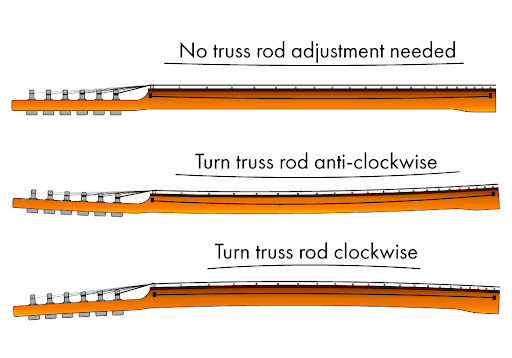
By adjusting the truss rod, you reduce or increase this relief. Tightening the rod straightens the neck, while loosening it allows the neck to bow forward slightly. The goal is not a perfectly straight neck, but one with just enough relief to balance comfort, clarity, and playability.
Do Truss Rods Vary for an Acoustic, Electric, or Classical Guitar?
Truss rods can vary depending on the type of guitar you have. Most modern electric and steel-string acoustic guitars include adjustable truss rods, though their design and access point may differ.
Classical guitars are a different story. Many traditional classical guitars do not have adjustable truss rods, relying instead on thicker neck profiles and internal reinforcement to handle string tension.
Electric guitars often feature single-action or dual-action truss rods while acoustics commonly use single-action rods.
How Do You Adjust the Truss Rod on a Guitar?
Adjusting a truss rod is best done in small increments.
The basic steps for truss rod adjustment are as follows:
- Before making adjustments, check the neck relief by fretting the low E string at the first and last fret and observing the gap around the middle of the neck.
- If the gap is too large, the neck has too much relief and may need tightening. If there is little to no gap, loosening the rod may be necessary.
- Using the correct tool, usually an Allen wrench or nut driver, turn the adjustment nut no more than a quarter turn at a time.
- After each adjustment, retune the guitar and allow the neck time to settle before reassessing.
- If you feel resistance, uncertainty, or discomfort at any point, it is best to stop and consult a professional.
Truss Rod FAQs
Do some acoustic guitars not have truss rods?
Yes. Many vintage acoustic and classical guitars do not have adjustable truss rods. These instruments rely on neck construction, wood selection, and internal bracing for stability. Adjustments to these guitars are more complex, often requiring professional repair.
Which way do I turn the truss rod of a guitar to make the strings closer to the fretboard?
In most cases, turning the truss rod clockwise tightens it and reduces neck relief, which brings the strings closer to the fretboard. Turning it counterclockwise loosens the rod, increasing relief and raising the string height slightly.
Do all Fender guitars have bi-flex truss rods?
Not all Fender guitars have bi-flex truss rods, but many modern Fender models do. Vintage-style reissues and some older instruments may use traditional single-action rods instead. Checking the model specifications is the best way to know for sure.
What are the signs of a damaged truss rod in a guitar?
Signs of a damaged truss rod can include:
- A neck that will not respond to adjustment
- Unusual creaking sounds during turning
- An adjustment nut that spins freely without affecting the neck
- A severe back bow or forward bow
Can adjusting the truss rod fix fret buzz on my guitar?
If fret buzz is caused by improper neck relief, a truss rod adjustment can help. However, fret buzz can also result from uneven frets, low nut slots, or saddle issues, and a truss rod adjustment alone cannot fix them.
Can a truss rod fix a warped guitar neck?
A truss rod adjustment can correct many minor neck issues, but it cannot fix severe warping, twisting, or structural damage.
Can a truss rod be replaced if it's damaged?
Yes, guitarists can replace truss rods if they are damaged. However, truss rod replacement is a complex and labor-intensive repair. It often involves removing the fretboard and should only be performed by an experienced luthier.
What are the signs of a truss rod that needs adjustment?
Common signs that a truss rod needs an adjustment include:
- High or uneven action
- Excessive fret buzz
- Difficulty playing in certain areas of the neck
- Visible bowing when sighting down the neck
- Seasonal changes in temperature and humidity
Final Thoughts
The truss rod is a small component with a big impact on how a guitar performs. Understanding what it does and how it affects playability can help you ensure your instrument performs well for years to come.
Expert Insight From: Griffin Piazza – Electric & Acoustic Guitar Expert
Griffin has over a decade of experience in the music retail industry and a deep knowledge of both electric and acoustic guitars. His hands-on experience helps ensure our recommendations and insights are grounded in real-world expertise.