



What is a Guitar Capo?
Posted by Alejandro on Mar 28th 2026
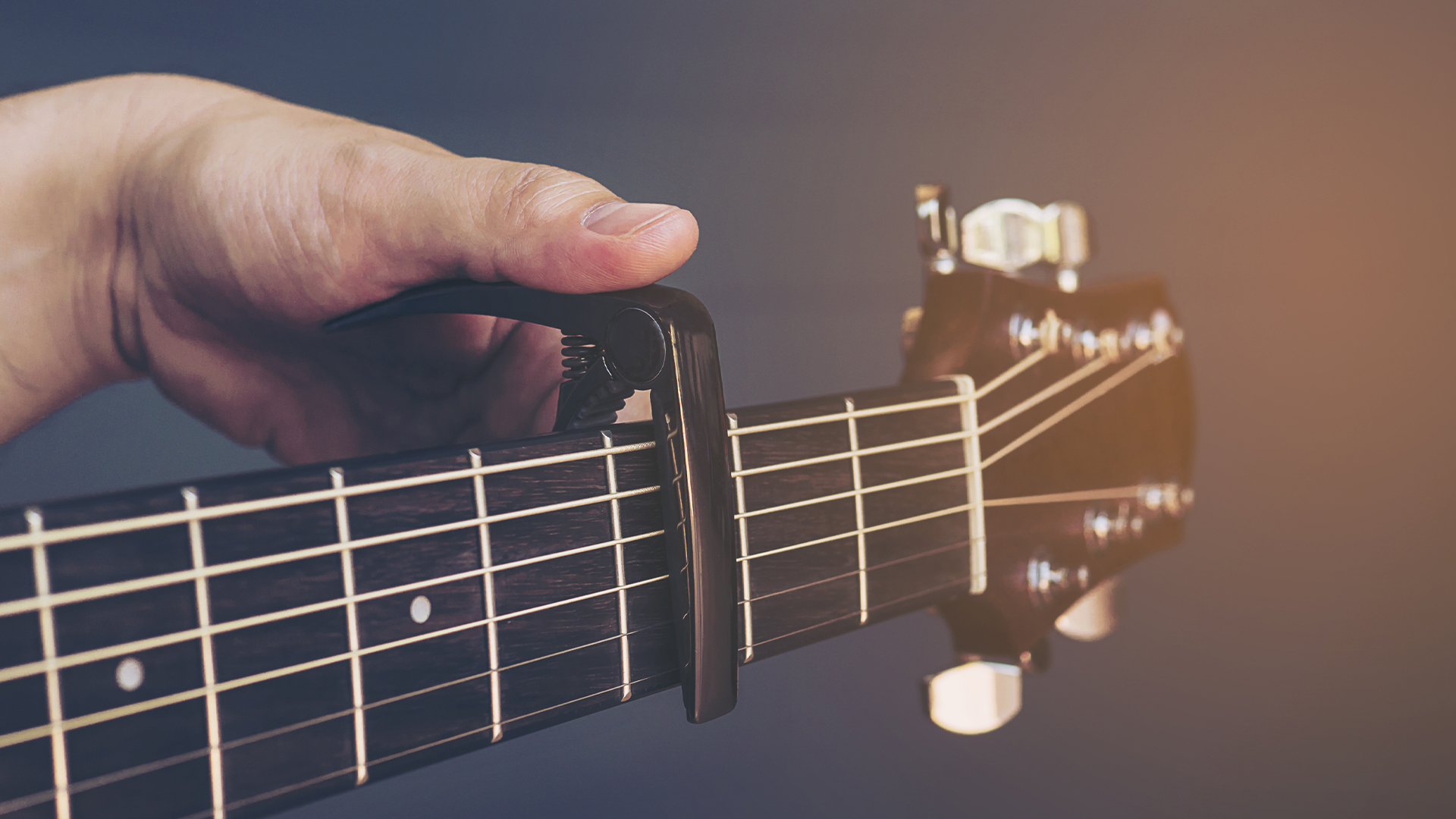
What is a Guitar Capo?
A guitar capo is a simple accessory that can make a major difference in how a song sounds. For beginners and experienced players alike, a capo opens up new keys, new voicings, and new creative options without requiring a completely different approach to the fretboard.
About Guitar Capos
A guitar capo clamps across strings on a specific fret; this action shortens the vibrating length of the strings, raising the pitch. That means you can play familiar open chord shapes while sounding like you are playing in a different key. For example, if you play a G cord with a capo on the second fret, it will sound like you are playing an A chord.
Most people use capos on standard six-string guitars (acoustic and electric guitars alike), although there are models for 12-string guitars, classical guitars, banjos, and mandolins.
Different Types of Capos
Trigger Capos
Trigger capos have a spring-loaded design that makes them fast to attach or remove with one hand, making them popular with live performers.
Yoke/Screw Capos
Screw or yoke capos tighten with an adjustable mechanism that offers more precise tension, which can help reduce tuning issues.
Toggle Capos
Toggle capos use a simple strap or latch system. They are lightweight and often affordable, though they may not offer the same fine control as other designs.
Partial Capos
Partial capos cover only certain strings, rather than all six. Guitarists use them for alternate voicings and creative tunings without fully retuning the guitar.
Specialty Capos
Specialty capos are made for specific guitar neck shapes or instruments like 12-string acoustic guitars or classical guitars with flatter fingerboards.
Benefits of Capos
A capo offers several benefits that make it more than just a convenience item.
- It allows guitarists to change keys quickly while still using open chord shapes they already know.
- A capo makes difficult songs more approachable. A progression filled with barre chords in one key may become far easier when transposed with a capo.
- A capo changes the guitar's tonal character. Moving chord shapes higher up the neck of the guitar can create a brighter, tighter sound that works well in both solo guitar playing and full-band arrangements.
- Capos are also useful for songwriting. A familiar progression can feel fresh when played with a capo in a new position, leading to different voicings, resonances, and melodic ideas.
Popular Capo Brands
Shubb
Shubb is known for its durable build quality and adjustable screw-style capos. Many players appreciate them for their precise tension control and dependable intonation.
G7th Capos
G7th Capos offers premium capo designs with a focus on even pressure and ease of use. Their performance-oriented models are especially popular with gigging musicians.
Kyser
Kyser is one of the most recognizable names in trigger capos. Kyser capos are fast, sturdy, and widely used by players who need quick changes on stage.
D’Addario
D'Addario (Planet Waves) makes capos that balance affordability, reliability, and thoughtful design.
Thalia
Thalia capos stand out for their refined styling and interchangeable fret pads, making them appealing to players who want both function and presentation.
Using Guitar Capos
A capo may be easy to attach to a guitar, but using one well takes a bit of practice.
Playstyle & Genre Considerations
Capos are especially common in folk, country, pop, worship music, and acoustic rock. In these genres, open chords and ringing strings are a big part of the sound, and a capo helps preserve that quality in different keys.
That said, capos are not limited to acoustic players. Electric guitarists also use them for texture, layered rhythm parts, and alternative voicings.
Placement
A capo should usually be placed just behind the fret (i.e., not directly on top of it and not too far back from it). This positioning helps the strings ring clearly with less pressure. If the capo is too far from the fret, the strings may buzz or go sharp.
The capo should also sit evenly across all strings, as uneven pressure can cause muted strings, buzzing, or tuning problems.
Technique
Using a capo well means doing more than simply clipping it on an instrument; proper technique is also important.
To start:
- Check tuning before and after placing the capo.
- Use only as much tension as needed.
- Think musically about chord shapes. A capo does not just change pitch. It changes where the familiar shapes sit on the neck and how the guitar resonates. Learning how chord names relate to capo position is an important skill that helps you communicate with other musicians and understand what key you are really in.
Guitar Capo FAQs
What is the purpose of a capo on a guitar?
A capo raises the pitch of the open strings by shortening the string length. Its main purpose is to let guitarists use familiar chord shapes while playing in different keys.
Does a capo change the key of a song?
Yes. A capo transposes the guitar upward by the number of frets where it is placed. The chord shapes stay the same under your fingers, but the actual sounding key changes.
Should a beginner guitarist use a capo?
Yes. A capo can help beginners because it makes many songs easier to play and lets newer players use simple open chords in keys that might otherwise require barre chords.
Do real guitarists use capos?
Beginners, professional performers, session guitar players, and songwriters alike can all benefit from using a capo.
What type of capo should I use?
The right capo depends on your instrument, playing style, and preferences. Trigger capos are great for quick changes, while screw-style capos offer more control over tension, for example.
What are guitar strings?
Guitar strings are the metal or nylon strands stretched from the bridge to the tuning machines that produce sound when they vibrate. A capo works by pressing those strings down at a chosen fret, so their vibrating length becomes shorter.
How does a capo affect the sound of a guitar?
A capo generally makes a guitar sound brighter and more focused.
How do you use a guitar capo correctly?
To use a guitar capo correctly:
- Place it just behind the desired fret.
- Make sure all strings ring clearly.
- Check your tuning afterward.
- Use only enough pressure to fret the strings cleanly without pulling them sharply.
How do you properly place a capo on a guitar?
To properly place a capo on a guitar:
- Line the capo up parallel to the fret.
- Position it close behind the fret wire.
- Confirm that it applies even pressure across the strings.
- Test each string individually to make sure there is no buzzing or muting.
Find Your Style with a Guitar Capo
A guitar capo is a practical tool that is easy to keep in a case or gig bag. It helps guitarists adapt to different singers, explore new voicings, and bring a fresh tonal character to familiar chord progressions. Whether you are just learning your first songs or refining your approach as an experienced player, understanding how a capo works can make your playing more expressive.
Expert Insight From: Matthew Chulka – Acoustic & Electric Guitar Expert
Matthew has over two decades of experience in the music retail industry and a detailed knowledge of acoustic and electric guitars. His first-hand experience helps ensure our knowledge and insights are grounded in real-world expertise.